File:PIA22093-TRAPPIST-1-PlanetLineup-20180205.jpg


摘要
| 描述 |
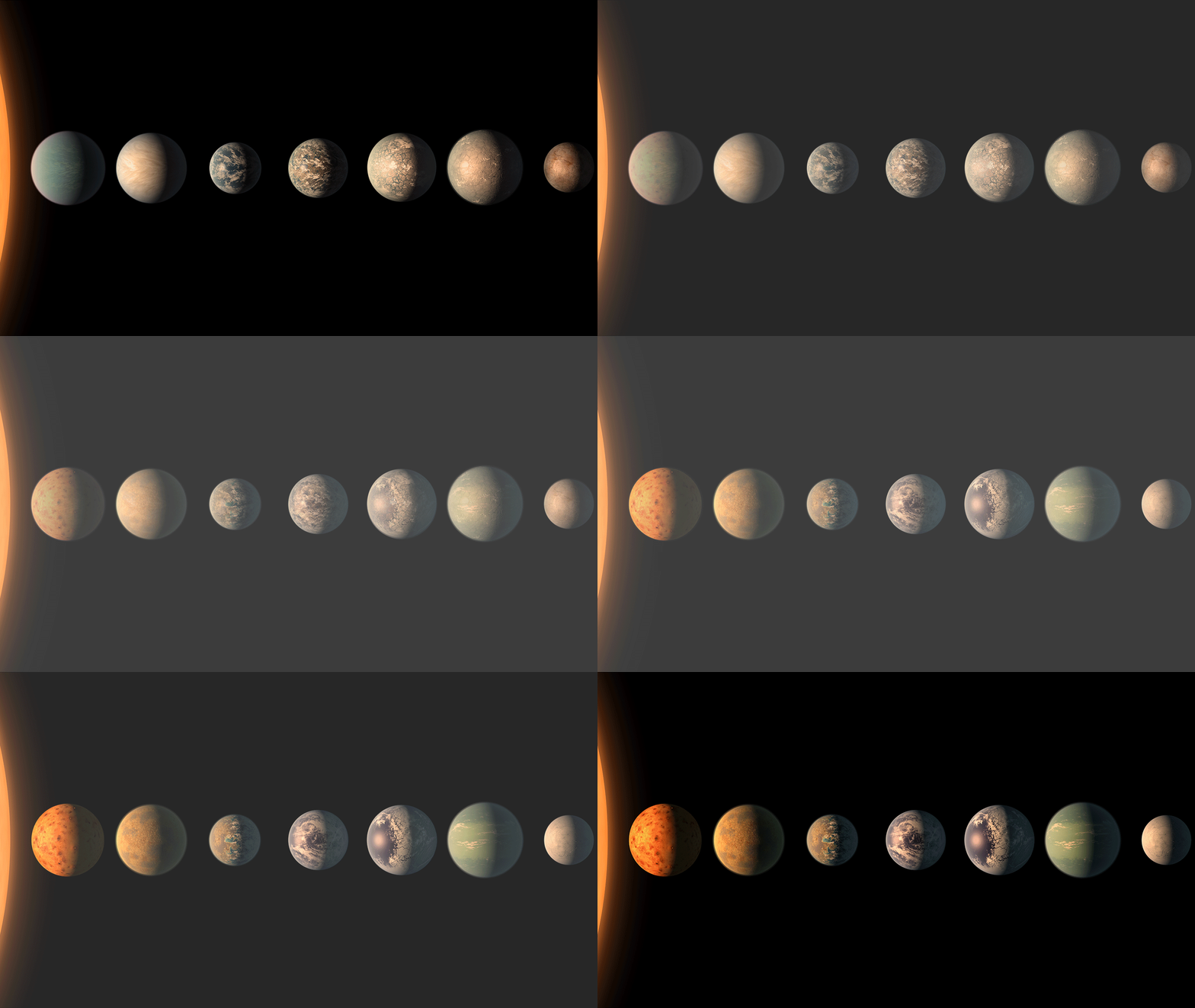
English: PIA22093: TRAPPIST-1 Planet Lineup - Updated Feb. 2018
Labeled version https://photojournal.jpl.nasa.gov/catalog/PIA22093 This artist's concept shows what the TRAPPIST-1 planetary system may look like, based on available data about the planets' diameters, masses and distances from the host star, as of February 2018. This image represents an updated version of PIA21422, which was created in 2017. The planets' appearances were re-imagined based on a 2018 study using additional observations from NASA's Spitzer and Kepler space telescopes, in addition to previous data from Spitzer, the ground-based TRAPPIST (TRAnsiting Planets and PlanetesImals Small Telescope) telescope and other ground-based observatories. The system was named for the TRAPPIST telescope. The new analysis concludes that the seven planets of TRAPPIST-1 are all rocky, and some could contain significant amounts of water. TRAPPIST-1 is an ultra-cool dwarf star in the constellation Aquarius, and its planets orbit very close to it. The form that water would take on TRAPPIST-1 planets would depend on the amount of heat they receive from their star, which is a mere 9 percent as massive as our Sun. Planets closest to the star are more likely to host water in the form of atmospheric vapor, while those farther away may have water frozen on their surfaces as ice. TRAPPIST-1e is the rockiest planet of them all, but still is believed to have the potential to host some liquid water. In this illustration, the relative sizes of the planets and their host star, an ultracool dwarf, are all shown to scale. NASA's Jet Propulsion Laboratory, Pasadena, California, manages the Spitzer Space Telescope mission for NASA's Science Mission Directorate, Washington. Science operations are conducted at the Spitzer Science Center at Caltech, also in Pasadena. Spacecraft operations are based at Lockheed Martin Space Systems Company, Littleton, Colorado. Data are archived at the Infrared Science Archive housed at Caltech/IPAC. Caltech manages JPL for NASA. For additional information about the Spitzer mission, visit http://www.nasa.gov/spitzer and http://spitzer.caltech.edu. For additional information on the Kepler and the K2 mission, visit www.nasa.gov/Kepler. For additional information about exoplanets, visit https://exoplanets.nasa.gov/ |
| 日期 | |
| 来源 | http://photojournal.jpl.nasa.gov/figures/PIA22093_fig1.jpg |
| 作者 | NASA/JPL-Caltech |

许可协议

|
本文件的著作权人,NASA/JPL-Caltech,允许任何人在适当地表明著作权人的姓名的前提下,以任何目的使用本文件。传播,演绎作品,商业用途及所有其他用途被允许。 |
|
|
 
|
According to JPL's image use policy additional restriction is that no endorsement of any product or service by Caltech, JPL or NASA is claimed or implied.
Caltech's disclaimer: Caltech makes no representations or warranties with respect to ownership of copyrights in the images, and does not represent others who may claim to be authors or owners of copyright of any of the images, and makes no warranties as to the quality of the images. Caltech shall not be responsible for any loss or expenses resulting from the use of the images, and you release and hold Caltech harmless from all liability arising from such use. Usage on the English Wikipedia: On the English Wikipedia you can use the {{JPL Image}} template to display the copyright notice. (See w:Wikipedia:Using JPL images for details) |
文件历史
点击某个日期/时间查看对应时刻的文件。
| 日期/时间 | 缩略图 | 大小 | 用户 | 备注 | |
|---|---|---|---|---|---|
| 当前 | 2018年2月6日 (二) 16:29 | | 6,000 × 3,000(2.66 MB) | wikimediacommons>Drbogdan | User created page with UploadWizard |
文件用途
以下页面使用本文件:
